*Editor's Note: New post, November 2026. Prices and plan limits checked November 21, 2026, at regular list prices on the makers' own pricing and help pages.*
*Research review: prices, free-tier limits, and plan rules verified November 21, 2026 against Perplexity's Help Center and Pro page, OpenAI's ChatGPT pricing page and Plus help article, and Google's Search Help and Gemini subscriptions pages. No hands-on walkthroughs, and no search-quality test was run by us. Where accuracy research is quoted, it is named and dated in the text.*
In a sentence: for most everyday questions, start with the free one you already have open, because Google AI Mode costs nothing inside Search, Perplexity free is the best dedicated answer engine for cited research, and ChatGPT Search is the pick when the answer needs to turn into writing, files, or follow-up work.
Plain-English Verdict
All three read the web and write you an answer with links. They differ in what the free version lets you do, and in what the paid step actually buys. Perplexity is built for research and shows its sources most clearly. ChatGPT Search lives inside the strongest general assistant. Google AI Mode is already in the search box you use, and its basic form is free.
The worry: a confident answer whose citations do not actually back it up, trusted because the links look reassuring. In the Tow Center for Digital Journalism's 2025 test of 1,600 questions, AI search tools identified a news article's source incorrectly more than 60 percent of the time overall, and a separate 2025 study found that citations raise people's trust even when the citations are wrong. Choosing the tool whose sources you can check fastest is the real decision here.
How we checked this
Checked: Perplexity's Help Center plan comparison (updated November 19, 2026) and Pro page; OpenAI's ChatGPT pricing page and "What is ChatGPT Plus?" help article; Google's Search Help page for AI Mode and the Gemini subscriptions page; the Tow Center citation study as reported in March 2025.
Date: November 21, 2026
Method: Research review. See How We Review.
Quick poll: When an AI answer includes links, do you click them: always, only for big decisions, or almost never? Your answer is the whole decision in this post, in miniature.
What each one actually is
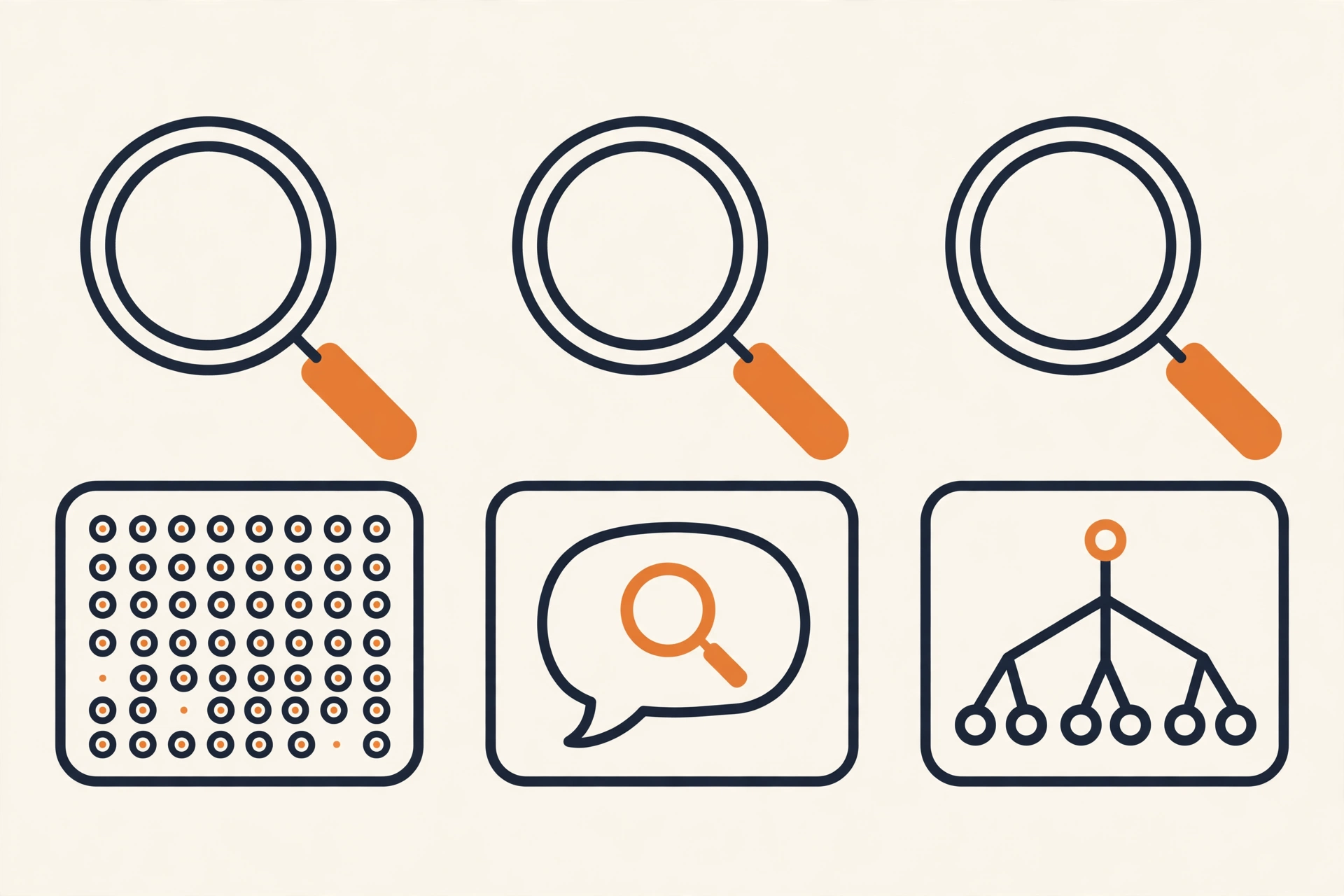
Perplexity is an answer engine first. You ask a question, it searches, and it writes a short answer with numbered citations inline, so each claim sits next to the page it came from. Its own Pro page puts it plainly: every answer includes inline citations from trusted sources, so you can verify claims. Search is the whole product, and the extras (file uploads, choosing which AI model answers, deep research reports) hang off that core.
ChatGPT Search is a feature inside ChatGPT, not a separate product. The same chat that writes emails and analyzes files can also search the web and cite pages. That matters because the paid plan, ChatGPT Plus at $20 a month, buys a general assistant: more messages, more uploads, expanded deep research, projects, and custom GPTs. Search rides along. OpenAI does not publish a fixed number for how many searches each plan gets; its help pages say limits exist, vary with demand, and are described as limited on Free and expanded on Plus.
Google AI Mode is a mode inside Google Search. Google's help page explains the trick it uses, called query fan-out: your question is divided into subtopics, each searched at the same time, and the results are combined into one answer with links. You reach it from the search page you already use, and the basic experience carries no subscription price. Google is unusually plain about the risk, in its own words: AI Mode does not always get it right, and AI responses may include mistakes.
The catch: none of the three sells you accuracy. Each paid step buys volume, speed, stronger models, and extras. The Tow Center test found paid tiers did not fix citation errors; Perplexity Pro answered more questions but declined fewer, so its error rate on that narrow test was not lower than free Perplexity. Pay for the workflow, not for peace of mind.
The free versions, honestly compared
This is where most readers should start, because all three free versions are genuinely usable.
Perplexity Free gives practically unlimited basic searches, in the Help Center's words, with the thorough mode rationed: 3 Pro Searches a day and 1 Research query a month, with limited file uploads and no choice of advanced models. A Pro Search is the slower, multi-step search that reads more sources. Basic search stays fast and cited; the ration applies to depth, not to asking questions.
ChatGPT Free gives unlimited everyday text chats on OpenAI's pricing page, with the tools around the chat marked limited: uploads, image creation, voice, deep research, and memory. Web search is part of the chat, so a free user can ask current questions, but OpenAI describes the surrounding limits qualitatively rather than with a number a reader can plan around. That vagueness is itself a fact worth knowing before you build a habit on it.
Google AI Mode on the free side has no separate free plan to describe, because AI Mode is a Search feature. You sign in with a Google Account and use it. The limits Google documents sit at the top end: the strongest model inside AI Mode, Gemini 4 Carbon, carries daily usage limits and is tied to the paid Google AI plans, with the highest access on AI Ultra. Everyday AI Mode questions do not hit a paywall in Google's help pages.
Who it's for: if you ask a handful of questions a day and want the sources in front of you, Perplexity Free is the strongest free starting point. If your questions turn into drafts, spreadsheets, and follow-up chats, ChatGPT Free keeps everything in one place. If you simply want a better answer from the search box you already use, AI Mode asks nothing new of you at all.
What the paid steps buy
| Tool | Free version | Paid step | Per year | What the paid step adds |
|---|---|---|---|---|
| Perplexity | $0, unlimited basic searches, 3 Pro Searches a day | Pro, $20 a month or $200 a year | $200 | Extended Pro Search, model choice, Deep Research, premium data sources |
| ChatGPT Search | $0, unlimited chats, tools limited | Plus, $20 a month, monthly billing only | $240 | Expanded messages and uploads, expanded deep research, projects, custom GPTs |
| Google AI Mode | $0 inside Search | AI Pro, $19.99 a month | $199.99 | 4x higher usage than Free, higher access in Search, 5 TB storage, Gemini in Gmail and Docs |

Read the year column carefully, because it hides the one real pricing trap in this post. Perplexity Pro and Google AI Pro both offer an annual route, so a committed year costs about $200. ChatGPT Plus has no annual billing at all; OpenAI's help article says so directly. Twelve months of Plus is $240, paid month by month. None of that makes Plus bad value, since it buys far more than search, but a reader comparing headline prices ($20, $20, $19.99) would never see the $40 gap.
Price history, from our Monday price checks: ChatGPT Plus has one tracked check so far, $20 a month on October 16, 2026, so its low and high across the tracked period are both $20. Perplexity and Google AI Mode have no snapshot rows yet, so no strip is shown for them rather than padding one out.
The price tag test: the paid step here cannot be stated as one clean sentence for the field, because the three $20 price tags buy three different things (search depth at Perplexity, a general assistant at OpenAI, and a bundle with 5 TB of storage at Google), and ChatGPT Plus adds a billing catch on top, monthly-only payments with no annual discount.
Buy now or wait: no dated sale window for any of the three appeared in this run's research, and all three free versions cover everyday questions, so waiting costs nothing. Decide after a week on the free versions; the annual discounts at Perplexity and Google reward committing only once you know which one you actually open.
Skip this if…
Perplexity — you want the answer to become a document, not just an answer
ChatGPT Search — you need a published number for your search allowance
Google AI Mode — you want a standalone research tool with a saved library
Where each one wins
The price: Perplexity wins the researcher's brief. Citations are the product, the free tier's limits are printed in a table you can plan around (3 Pro Searches a day, 1 Research query a month), and Pro at $200 a year is the cheapest full year of the three paid steps that focus on answers. For a student, a writer checking facts, or anyone whose job is reading sources, that clarity is the feature.
ChatGPT Search wins the worker's brief. If the answer is step one and the deliverable is step two (a summary, a draft, a table built from an uploaded file), one tool doing both beats a better search tool plus a second app. Plus also carries the broadest extras for the same $20 headline: expanded deep research, projects, scheduled tasks, and custom GPTs. Its weakness is the one already named: OpenAI will not tell you a firm search limit, and there is no annual price.
Google AI Mode wins the nobody-changes-anything brief. It sits inside Search, handles follow-up questions, and splits hard questions into parallel subtopic searches on its own. For local questions, shopping comparisons, and anything where Google's own index and maps data matter, it starts closest to the answer. Its paid step is also the easiest to justify for a household, because AI Pro's $19.99 includes 5 TB of storage and family sharing through Google One, which our family AI plan guide prices in full.
What could be better: Perplexity's free ration is easy to burn through on a research-heavy morning, and its Pro limits are described as weekly averages rather than hard numbers. ChatGPT's limits are the vaguest of the three. AI Mode's best model is fenced behind the top-priced Ultra tier, and its answers sit inside a results page that still wants your clicks for other reasons.
FAQ
Which AI search is most accurate?
No honest ranking exists from the makers, and the independent test we cite is narrow: identifying a news article's headline, publisher, date, and URL from an excerpt. On that test the Tow Center found errors in more than 60 percent of answers overall, with Perplexity lowest at 37 percent incorrect. Treat every answer as a draft with sources attached, whichever tool you pick.
Is Perplexity free really unlimited?
Basic searches are described by Perplexity as practically unlimited. The deep modes are rationed: 3 Pro Searches a day and 1 Research query a month on the free plan, per its Help Center plan table.
Do I need to pay for Google AI Mode?
No. AI Mode is a feature of Google Search and carries no subscription price in Google's help pages. The paid Google AI plans raise usage limits and unlock higher access and the strongest models in Search; AI Pro costs $19.99 a month.
Why does ChatGPT Plus cost more over a year?
Because there is no annual plan. Plus is $20 a month, billed monthly only, per OpenAI's help article, so twelve months total $240. Perplexity Pro totals $200 a year and Google AI Pro $199.99 a year on their annual routes.
Which one should a student pick?
Perplexity Free for cited research, with the 3 daily Pro Searches saved for the hardest questions. Education pricing exists at Perplexity for verified students, and Google offers student terms on AI Pro in the US; check both official pages before paying full price anywhere.
First 30 days with your pick
Week 1 setup: pick one default and move it to where your questions start (browser default search, phone home screen, or the app you already open). Turn on search history in that one tool so follow-ups and past answers stay in one place.
Weeks 2 to 4, watch out for: the first time an answer sounds certain and the citation, opened, says something narrower. Note which tool it was. Also watch your free ration: if you hit Perplexity's 3 daily Pro Searches before lunch most days, that is your upgrade signal, and no other signal matters as much.
Day-30 keep or cancel check: paid plans here renew at $19.99 to $20 a month, and two of the three annual routes renew near $200. On day 30, count the days you opened your pick first. Fewer than half, cancel and return to the free versions; the annual discount is only a saving on a tool you use.
Was this post useful? Answered it / Out of date / Still confused
Method: Research review (no hands-on testing). Prices, free-tier limits, and billing rules checked November 21, 2026 on the makers' official pricing and help pages, as cited in the How we checked this box. Accuracy figures are from the published studies named in the text, not from any test run by us.
Corrections: Spotted an error? Tell us, and we fix mistakes publicly.
Prices: US list prices; verify before buying.
Source: Perplexity's Help Center, OpenAI's ChatGPT Plus help article, and Google's AI Mode help page.
Related Posts
 Gemini vs Copilot: Which AI Is Already in Your Subscriptions? (2026)
 Google Workspace vs Microsoft 365 for a Tiny Business (2026)
 Fathom vs. Otter.ai: Which AI Meeting Notes App Should You Use? (2026)
- Alternatives to HoneyBook: After the Loyalty Discount Expired
 Todoist vs TickTick: Which To-Do App Will You Actually Keep Using? (2026)